After the Clean: A Room-by-Room Post-Reno Checklist
Written by Andrew Hoang
Published · Updated on
Once your post-renovation clean is finished, check the work room by room in good light: the floors first, then the kitchen cabinets, then the bathrooms and other wet areas. Compare what you find with what a standard clean covers, so you know which marks are a cleaning issue and which are not.
This is the after checklist. If your clean is still ahead, start with how to prepare your HDB before the clean.
How should you check the work after the clean?
Go slowly, in good light, and follow the same order in every room. These eight steps cover a typical home:
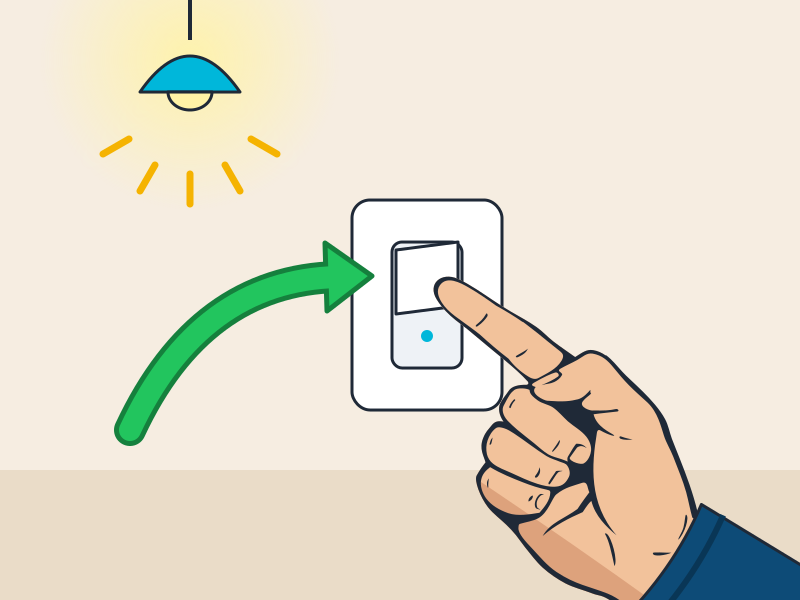
- Switch on every light, even in the daytime
- Start at the front door and work room by room
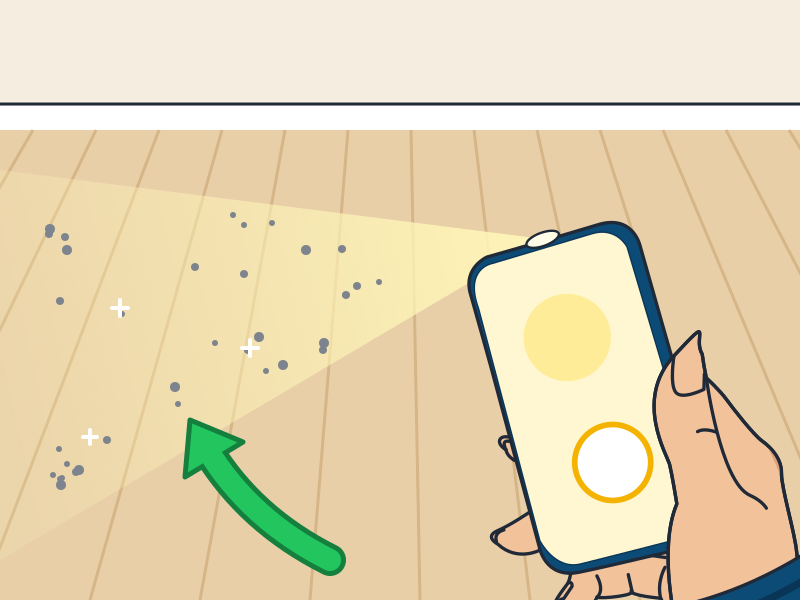
- Shine a phone torch low across each floor
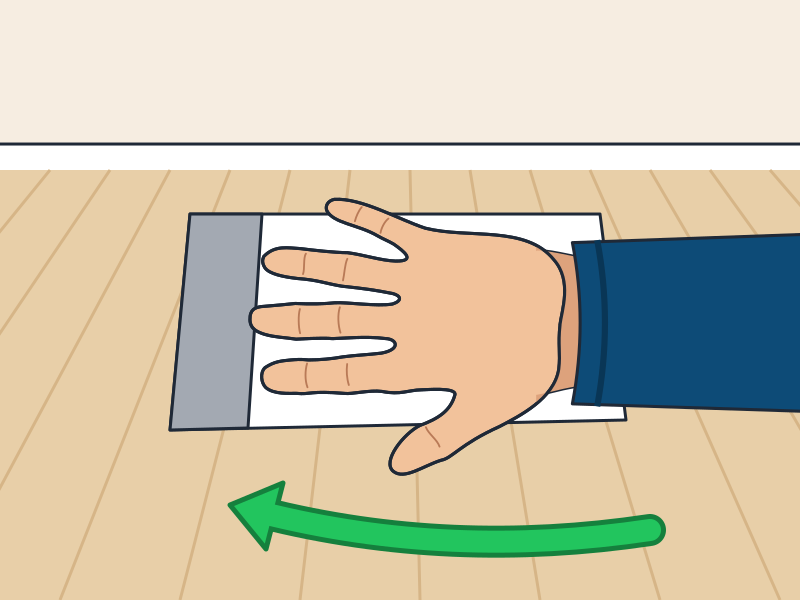
- Wipe floor edges and corners with a dry white cloth
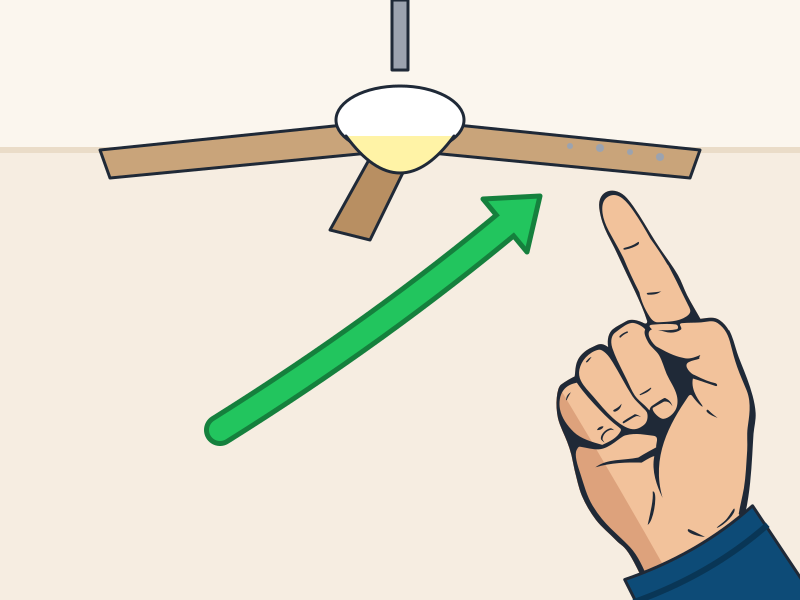
- Check fans and lights only if you booked the add-on
- Run a fingertip along cabinet doors and handles
- Look closely at wet-area corners and floor traps
- Photograph anything that looks like renovation damage
Before you start
Do the check with your furniture already where it will stay, so you are looking at the floor you will actually live with. Switch on every light in the room, even in the daytime, because shadows hide dust. Have your phone, a dry white cloth or a few tissues, and this list to hand.
What should you check on the floors?
In a standard clean, floors are vacuumed and mopped. So check for loose dust, grit and footprints, especially along the edges and in the corners of each room. Floors are not scrubbed or polished, so marks that only come off with scrubbing are outside a standard clean.
Shine a phone torch across the floor
Crouch down, hold your phone torch close to the floor and shine it across the surface rather than straight down. Light from the side makes fine dust and footprints stand out that you would miss from standing height. Try it in the middle of each room and near the doorways.
Wipe the edges and corners
Fold a dry white cloth and wipe a short stretch of floor where it meets the wall, then do the same in a corner or two. Look at the cloth afterwards. A grey line on it shows that dust is still sitting along that edge, which is easy to miss when you are standing up.
Ceiling fans and lights: only if you booked them
Ceiling fans, lights and lamps are an add-on, not part of the standard clean. If you booked the add-on, look at the fan blades and the light covers too. If you didn't, dust on the fan blades is expected, so leave them out of your check.
What should you check in the kitchen?
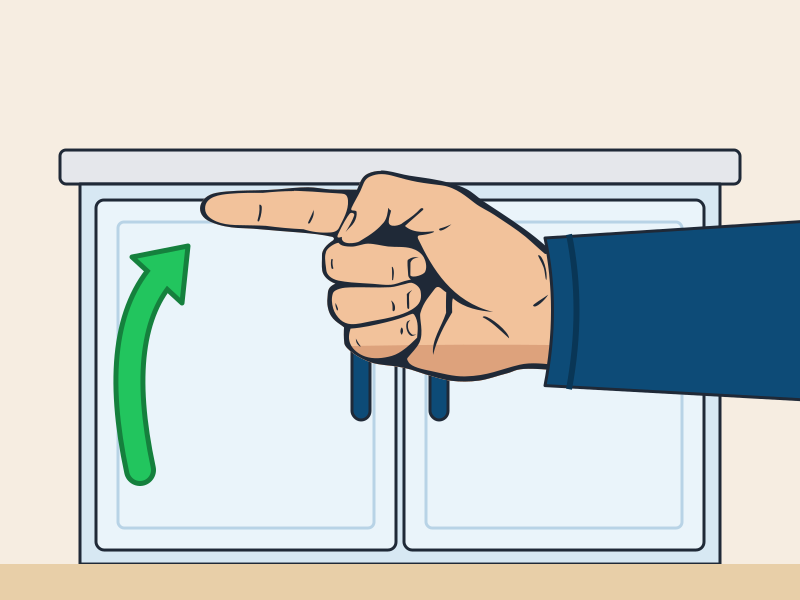
In the kitchen, a standard clean wipes the cabinets. Run a fingertip along the cabinet doors, the handles and the top edges you can reach, then look at your fingertip. The fume hood, backsplash deep cleaning and degreasing are not part of a standard clean, so leave them out of this check.
What should you check in the bathrooms and wet areas?
Bathrooms and other wet areas get a preventive anti-mould spray in a standard clean. It is a preventive treatment, so there may be little to see. Walls, grout cleaning, floor scrubbing, and polishing fixtures and mirrors are not part of a standard clean.
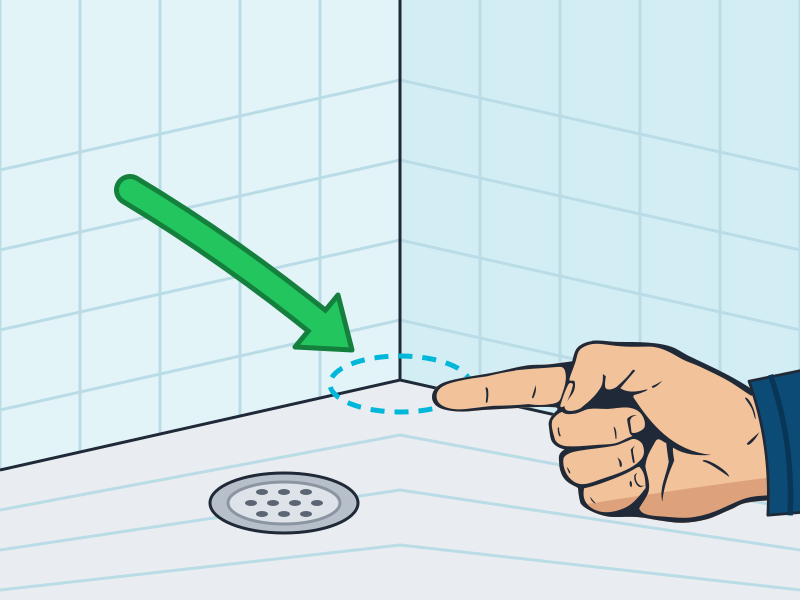
Look closely at the corners where the walls meet the floor and around the floor traps, where water and renovation grit tend to collect. If you find grout that needs cleaning or marks that need scrubbing, those fall outside a standard clean.
While you are there, check that each floor trap grating is closed. HDB's maintenance advice is to keep the grating closed so hair and other solid materials can't choke the trap (HDB: floor traps).
What does a standard clean not cover?
Use this table to sort what you find: anything in the right-hand column is outside a standard clean, so it is not something the clean was meant to fix.
| Area | Covered | Not covered |
|---|---|---|
| Floors | Vacuumed and mopped | Scrubbing or polishing |
| Kitchen | Cabinets wiped | Fume hood, backsplash deep cleaning, degreasing |
| Bathrooms and wet areas | Preventive anti-mould spray | Walls, grout cleaning, floor scrubbing, polishing fixtures and mirrors |
| Ceiling fans, lights and lamps | Add-on, only if booked | Not in the standard clean |
| Walls | Not covered | Wall cleaning |
Sanitising, fogging and odour removal are not part of a standard clean either. The services page describes each part of the clean.
What if you find renovation damage?
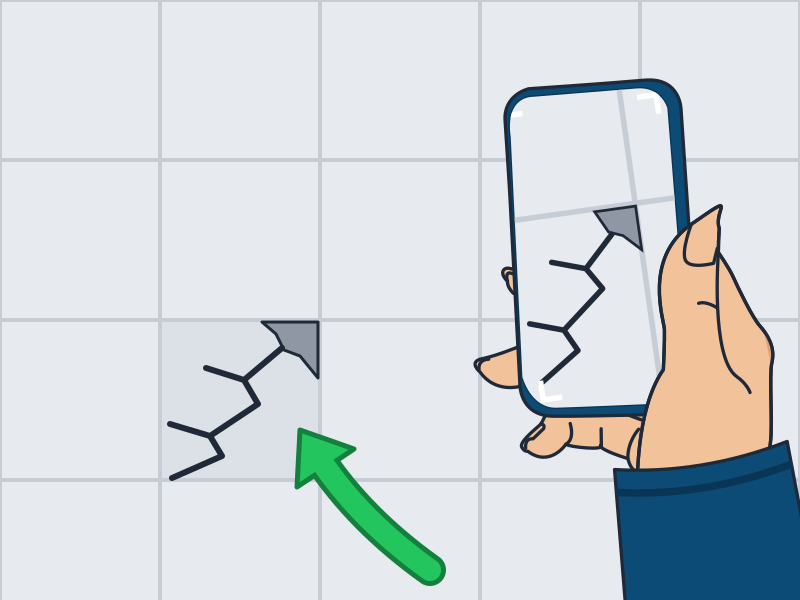
Some things you find are renovation problems, not cleaning problems: a chipped or cracked tile, a scratch in the new flooring, a cabinet door that won't close. A clean does not fix these. Take a clear photo of each one in good light, note which room it is in, and raise it with your renovation contractor.
If the problem looks like a defect in the flat itself rather than in the renovation work, and the flat is new, HDB follows up on defects during the 1-year Defects Liability Period that starts at key collection. HDB asks owners to report defects within 1 month of key collection and before renovating, because a defect reported after renovation may first need checking to see whether it came from the construction or the renovation works (HDB: rectification of defects in new flats).
Book your clean
If your clean is still ahead, WhatsApp us on +65 8058 2345 with your flat type and the date you'd like. Prices for every flat type are on our pricing page. You can also use Get My Recommendation or contact us.
Sources, both HDB, accessed 11 October 2026: Floor traps; Rectification of defects in new flats.